What Developments at the End of World War Ii Led to Fear That Peace Might Be Threatened Again
Skip to Principal Content of WWII
The Great Contend
From our 21st-century point of view, information technology is hard to imagine World War II without the United states of america equally a major participant. Before the Japanese assault on Pearl Harbor in 1941, nevertheless, Americans were seriously divided over what the office of the Usa in the state of war should be, or if it should even have a role at all. Fifty-fifty as the war consumed large portions of Europe and Asia in the tardily 1930s and early on 1940s, there was no clear consensus on how the United states of america should respond.

Top Image Courtesy of the Associated Press
From our 21st-century indicate of view, information technology is hard to imagine Earth State of war Ii without the United states of america as a major participant. Earlier the Japanese attack on Pearl Harbor in 1941, still, Americans were seriously divided over what the office of the U.s.a. in the state of war should exist, or if information technology should even have a role at all. Even as the state of war consumed large portions of Europe and Asia in the late 1930s and early 1940s, there was no clear consensus on how the U.s. should respond.
The US ambivalence about the war grew out of the neutralist sentiment that had long been a office of the American political landscape and had pervaded the nation since World War I. Hundreds of thousands of Americans were either killed or wounded during that conflict, and President Woodrow Wilson's idealistic program to ensure permanent peace through international cooperation and American leadership failed to become a reality. Many Americans were disillusioned by how piddling their efforts had accomplished and felt that getting so deeply involved on the global stage in 1917 had been a mistake.
Neither the rise of Adolf Hitler to power nor the escalation of Japanese expansionism did much to change the nation'due south isolationist mood in the 1930s. Most Americans all the same believed the nation's interests were best served past staying out of foreign conflicts and focusing on bug at habitation, particularly the devastating furnishings of the Smashing Depression. Congress passed a serial of Neutrality Acts in the late 1930s, aiming to forestall futurity involvement in strange wars by banning American citizens from trading with nations at war, loaning them money, or traveling on their ships.
But past 1940, the deteriorating global situation was incommunicable to ignore. Nazi Germany had annexed Austria and Czechoslovakia and had conquered Poland, Belgium, holland, and France. Britain was the only major European ability left standing confronting Hitler's military machine. The urgency of the situation intensified the fence in the Us over whether American interests were ameliorate served by staying out or getting involved.
Isolationists believed that Globe State of war Two was ultimately a dispute between strange nations and that the Usa had no good reason to go involved. The all-time policy, they claimed, was for the The states to build up its own defenses and avert antagonizing either side. Neutrality, combined with the power of the US military and the protection of the Atlantic and Pacific Oceans, would keep Americans prophylactic while the Europeans sorted out their own problems. Neutralist organizations like the America First Committee sought to influence public opinion through print, radio, and mass rallies. Aviator Charles Lindbergh and pop radio priest Father Charles Coughlin were the Commission's nigh powerful spokesmen. Speaking in 1941 of an "independent American destiny," Lindbergh asserted that the U.s. ought to fight whatever nation that attempted to meddle in the affairs of the Western Hemisphere. However, he argued, American soldiers ought non to accept to "fight everybody in the earth who prefers another organization of life to ours."
Interventionists believed the United States did have proficient reasons to get involved in World War 2, particularly in Europe. The democracies of Western Europe, they argued, were a critical line of defence against Hitler'due south fast-growing strength. If no European power remained as a check against Nazi Frg, the United States could become isolated in a globe where the seas and a significant amount of territory and resources were controlled past a unmarried powerful dictator. Information technology would be, equally President Franklin Delano Roosevelt put it, similar "living at the betoken of a gun," and the buffer provided by the Pacific and Atlantic would exist useless. Some interventionists believed Usa military machine action was inevitable, only many others believed the United States could even so avoid sending troops to fight on strange soil, if only the Neutrality Acts could be relaxed to allow the federal government to transport military equipment and supplies to Cracking Britain. William Allen White, Chairman of an interventionist system called the Commission to Defend America past Aiding the Allies, reassured his listeners that the indicate of helping United kingdom of great britain and northern ireland was to go along the U.s. out of the state of war. "If I were making a motto for [this] Committee," he said, "it would be 'The Yanks Are Not Coming.'"

Female person isolationists from the America First Committee, Keep America Out of War, and the Mothers' Crusade picket British Administrator Lord Halifax in Chicago, May 8, 1941.
(Image: Everett Collection Historical/Alamy Stock Photo, F2AWAM.)
"We well know that we cannot escape danger, or the fright of danger, by crawling into bed and pulling the covers over our heads."
President Franklin Delano Roosevelt
Public opinion polling was still in its infancy every bit World War II approached, but surveys suggested the force of events in Europe in 1940 had a powerful impact on American ideas most the war. In January of that year, one poll found that 88% of Americans opposed the idea of declaring war against the Axis powers in Europe. Equally late equally June, only 35% of Americans believed their regime should risk war to help the British. Soon subsequently, however, France fell, and in August the German Luftwaffe began an all-out bombing campaign against U.k.. The British Regal Air Strength valiantly repelled the German onslaught, showing that Hitler was not invincible. A September 1940 poll plant that 52% of Americans now believed the United States ought to risk war to assistance the British. That number only increased equally Britain connected its standoff with the Germans; by Apr 1941 polls showed that 68% of Americans favored war against the Axis powers if that was the just fashion to defeat them.

Like this article? Read more in our online classroom.
From the Collection to the Classroom: Didactics History with The National WWII Museum
Learn More
The Japanese assail on Pearl Harbor on Dec 7, 1941, ended the debate over American intervention in both the Pacific and European theaters of World War II. The day after the assault, Congress declared war on Imperial Japan with only a single dissenting vote. Germany and Italy— Japan's allies—responded past declaring war against the United states. Faced with these realities and incensed past the attack on Pearl Harbor, everyday Americans enthusiastically supported the war effort. Isolation was no longer an choice.

The Assail On Pearl Harbor December 7, 1941
The National WWII Museum volition commemorate the 80th anniversary of Pearl Harbor with fourscore days of articles, oral histories, artifacts, and more.
LEARN More
Explore Farther
-
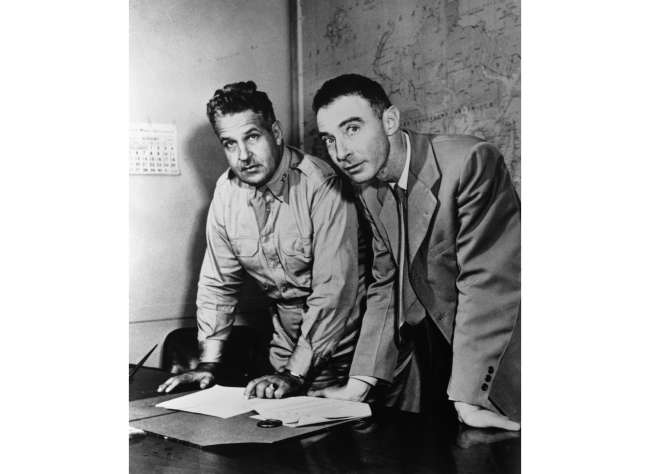
Making Public What Was Once Secret: Los Alamos and The Manhattan Project
Los Alamos and other Manhattan Project Sites developed beyond the US in 1942 and 1943.
-
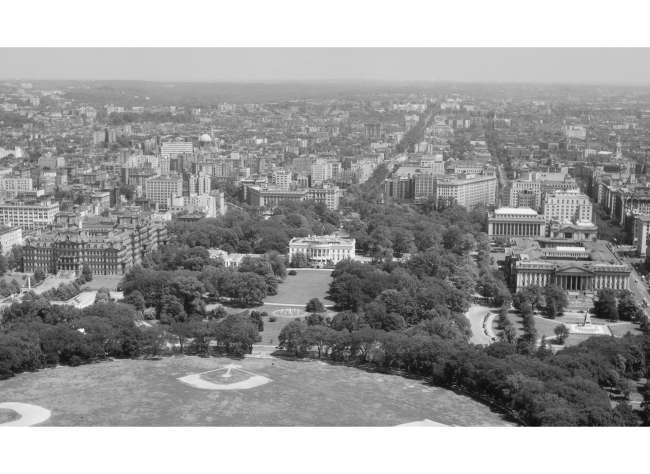
The War Refugee Board
When President Franklin Roosevelt created the State of war Refugee Board in January 1944, he tasked this new government agency with rescuing and providing relief for Jews and other groups facing Nazi persecution and murder in Europe. By that time, more than 5 1000000 European Jews had already been murdered. The State of war Refugee Lath staff used creativity and the near-certainty of Allied victory to aid hundreds of thousands of people in the final seventeen months of Earth War 2.
-
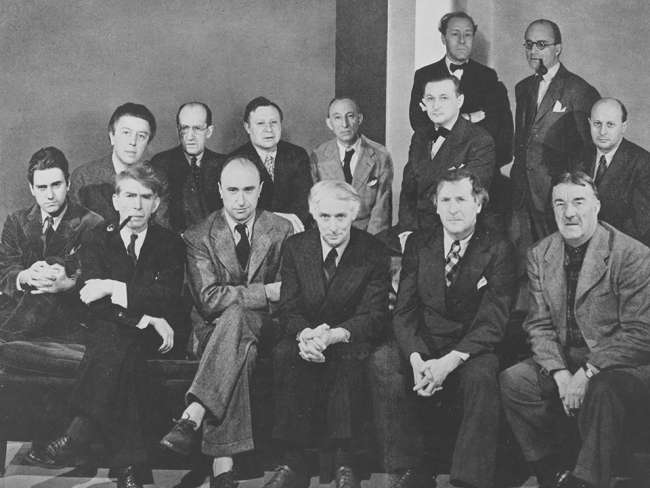
Beginning Fruits of Exile: European Fine art at Pierre Matisse 1942
In March 1942, a special showroom opened in New York City of 14 pieces of art each contributed by xiv artists who had escaped Nazi-occupied Europe.
-
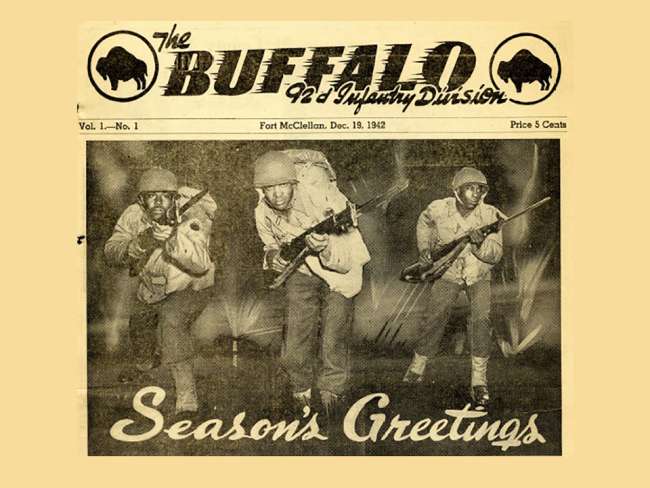
The Buffalo: 92nd Infantry Division's Weekly Newspaper during Earth State of war II
The 92nd Infantry Division'due south unit newspaper earned a place as one of the premier combat division publications in the Armed Forces during World War 2.
-
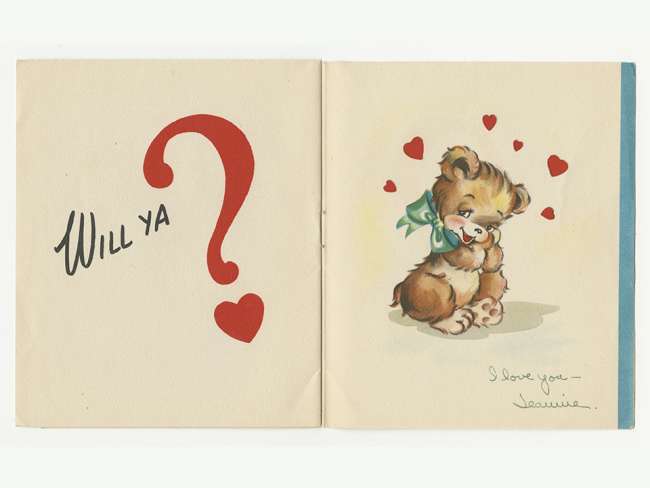
Love—Guess Who! Valentine's Letters from World War Two
Forced apart by war, newlyweds and expectant parents Richard and Jean Porritt historic Valentine's Solar day the merely manner they could: through greeting cards and honey letters.
-
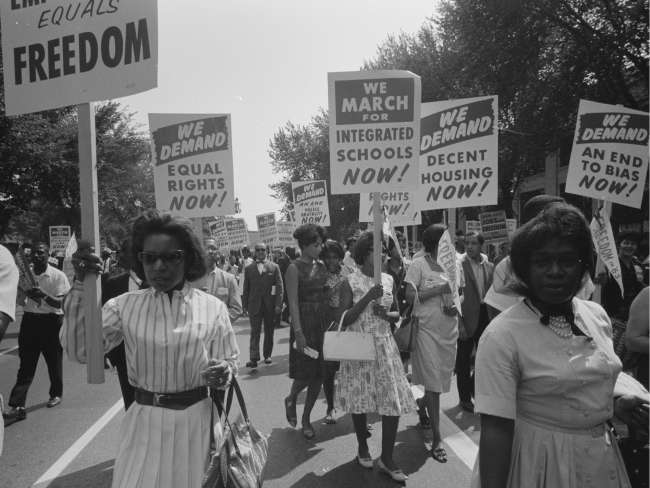
Tension in a Peacetime Social club
The experiences of those left to support the war attempt on the Habitation Forepart, combined with those of returning veterans, helped further reveal underlying tensions and led to significant changes in the social history of the Usa.
-
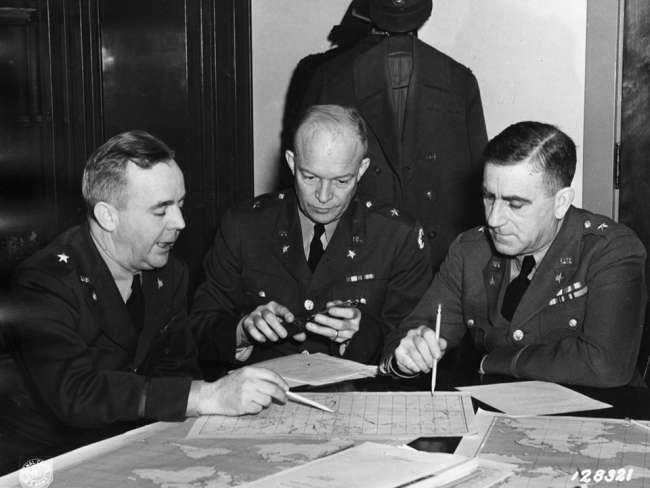
First Washington Conference: ARCADIA
The Outset Washington Briefing, code-named ARCADIA, from December 22, 1941 to January 14, 1942, set the strategic direction for the Anglo-American war effort and established the Articulation Chiefs of Staff.
-
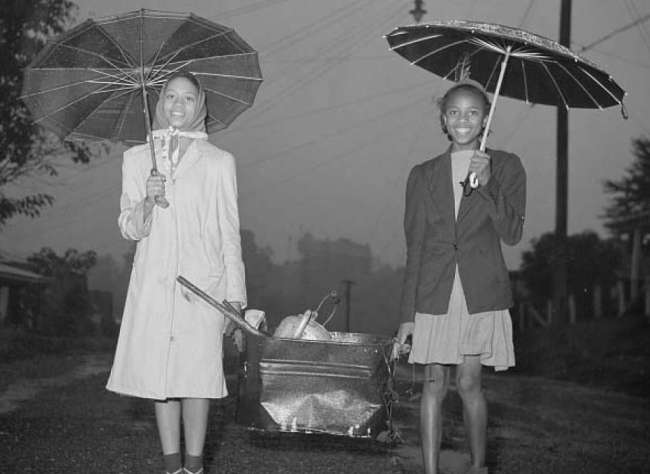
Salvage For Victory: Earth War Ii & At present
On January 10, 1942, the Usa launched one of its most important and also most memorable domestic initiatives of the entire state of war: the "Relieve For Victory" entrada.


richardsonansts1975.blogspot.com
Source: https://www.nationalww2museum.org/war/articles/great-debate
0 Response to "What Developments at the End of World War Ii Led to Fear That Peace Might Be Threatened Again"
Enregistrer un commentaire